
Replacing or installing a driveway in Southend on Sea is one of the most effective ways to boost your property’s kerb appeal and value. Whether you live near the seafront in Westcliff, in the residential streets of Thorpe Bay or closer to Southchurch, choosing the right material and installer matters. Coastal Essex homes face specific challenges that inland properties do not, from salt-laden air and sandy subsoils to stricter drainage requirements under SuDS regulations.
This guide covers everything Southend homeowners need to know before investing in a new driveway: material options and how they perform near the coast, realistic 2026 pricing per square metre, planning permission rules, drainage and groundwork considerations, and how to choose a contractor you can trust.
What Are the Best Driveway Materials for Southend on Sea Properties?
The right material depends on your budget, the look you want and how well it handles coastal conditions. Southend sits on the Thames Estuary, so driveways here are exposed to salt spray, moisture and occasional tidal flooding. Materials need to resist weathering and allow proper water drainage. Here is how the most popular options compare for properties in and around Southend on Sea.
Block Paving
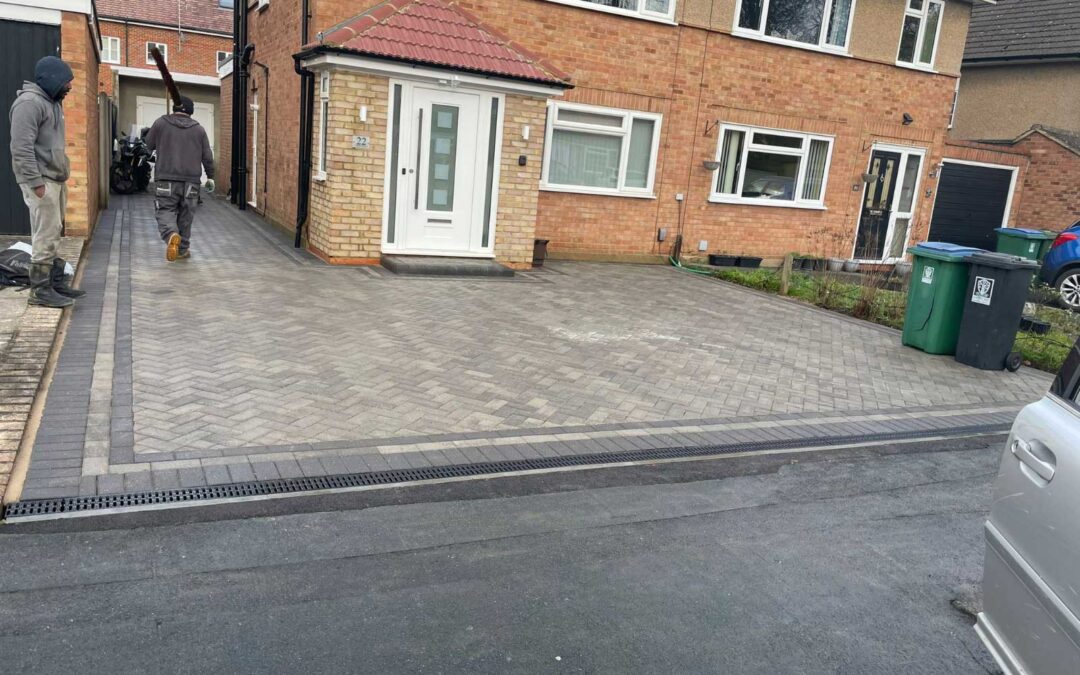
Block paving remains the most popular driveway choice across Essex. Individual bricks or blocks are laid in patterns over a compacted sub-base, creating a durable and visually appealing surface. For coastal Southend properties, block paving works well because damaged sections can be lifted and replaced without redoing the entire driveway. It is also naturally permeable when laid with sand-filled joints, helping meet SuDS drainage requirements. Choose frost-resistant blocks rated to withstand salt exposure for the longest lifespan. A well-installed block paved driveway can last 25 to 30 years with minimal maintenance.
Resin Bound Surfacing
Resin bound driveways have become increasingly popular in Southend on Sea and across South Essex. Natural aggregate stones are mixed with a clear UV-stable resin and trowelled onto a prepared base, creating a smooth, seamless finish. The surface is fully permeable, which is a significant advantage for properties near the coast where surface water runoff is a concern. When choosing resin for a coastal property, make sure your installer uses aliphatic resin binders rather than cheaper aromatic versions. Aliphatic resin resists UV yellowing and holds up far better against salt air. A quality resin bound driveway typically lasts 15 to 25 years.
Tarmac and Asphalt
Tarmac is the most affordable option for larger driveways. It provides a clean, functional finish and can be driven on within 24 to 48 hours of installation. However, tarmac is not permeable, so your installer will need to factor in drainage channels or a soakaway to comply with planning rules. In coastal areas, tarmac can soften slightly during hot summers, particularly on south-facing driveways that get direct sun. It typically lasts 15 to 20 years before needing resurfacing.
Gravel and Shingle
Gravel driveways are the lowest cost option and can look attractive when properly edged and contained. They offer excellent natural drainage, making them SuDS compliant without additional engineering. For Southend properties, use angular gravel rather than rounded pebbles, as angular stones lock together and resist displacement from wind and foot traffic. The main drawback is maintenance: gravel needs topping up every few years and can migrate onto paths and into the road. With regular upkeep, a gravel driveway can last decades.
Imprinted Concrete
Imprinted or pattern printed concrete gives the appearance of natural stone, brick or slate at a lower cost than the real thing. A single concrete slab is poured, stamped with a pattern and sealed. It creates a strong, low-maintenance surface, but it is not permeable, so drainage provisions are essential. In Southend’s coastal climate, the sealant coat needs reapplying every 3 to 5 years to prevent moisture ingress and colour fading. When maintained, imprinted concrete lasts 20 to 25 years.
How Much Does a New Driveway Cost in Southend on Sea in 2026?
Driveway costs vary based on the material, the size of the area and the amount of groundwork needed. Southend properties on sandy or clay subsoil sometimes require deeper excavation and a thicker sub-base, which adds to the overall cost. Below are typical 2026 installed prices per square metre for driveways in South Essex, including labour, basic groundwork and standard materials.
| Material | Cost Per Square Metre (Installed) | Typical 50 sqm Driveway |
|---|---|---|
| Gravel | £40 to £100 | £2,000 to £5,000 |
| Tarmac | £60 to £90 | £3,000 to £4,500 |
| Resin Bound | £70 to £120 | £3,500 to £6,000 |
| Imprinted Concrete | £85 to £130 | £4,250 to £6,500 |
| Block Paving | £115 to £175 | £5,750 to £8,750 |
These figures are estimates based on UK averages for 2026. Actual costs for your Southend property may differ depending on access, skip hire, existing surface removal and any kerb-dropping work required. Always get at least three written quotes from local installers before making a decision.
Do You Need Planning Permission for a Driveway in Southend on Sea?
In most cases, you do not need planning permission to install a new driveway in Southend on Sea, provided the surface is permeable or drains to a permeable area within your property boundary. This rule applies across England under permitted development rights introduced in 2008. If you plan to use a non-permeable material such as tarmac or imprinted concrete over an area larger than 5 square metres, you will need to include a drainage solution, either a soakaway, channel drain or permeable border strip, or apply for planning permission from Southend on Sea City Council.
Properties in conservation areas or listed buildings may have additional restrictions. If your property is in a conservation zone, such as parts of Leigh Old Town or the Clifftown area, check with the council before starting work. Dropped kerb applications are handled by Essex County Council Highways and typically cost between £800 and £1,500 depending on the width and existing kerb type.
Coastal Drainage and Groundwork Considerations
Southend on Sea sits on a mix of London Clay and sandy alluvial deposits, particularly closer to the estuary. This creates specific challenges for driveway installations. Clay soil expands and contracts with moisture changes, which can cause cracking in rigid surfaces like concrete. Sandy ground near the coast drains quickly but offers less structural support, meaning a thicker sub-base is often needed.
A professional driveway installer in Southend will typically excavate to a depth of 200 to 250mm and lay a compacted Type 1 MOT sub-base before any surface material goes down. For properties in flood-prone areas or close to the seafront, additional drainage measures such as linear channel drains or connection to a soakaway are essential. Sustainable Drainage Systems (SuDS) compliance is not just a planning requirement in coastal Essex. It protects your property and your neighbours from surface water flooding.
How Long Does a Driveway Installation Take in Southend?
Most residential driveway installations in Southend on Sea take between 3 and 7 working days, depending on the material and the scope of groundwork. Here is a rough guide to timelines.
Gravel driveways are the quickest to install, typically completed in 1 to 2 days. Tarmac driveways usually take 2 to 3 days including excavation and laying. Resin bound surfaces need 3 to 4 days because the base must cure before the resin is applied. Block paving takes 4 to 7 days for an average-sized driveway, as each block is hand-laid. Imprinted concrete typically takes 3 to 5 days, with additional curing time before the surface can be driven on.
Weather can affect timelines, particularly for resin and concrete work. Resin bound surfaces should not be laid in rain or when temperatures drop below 5 degrees Celsius. Your installer should provide a clear schedule and keep you informed of any weather-related delays.
Comparing Driveway Materials: Which One Suits Your Southend Home?
| Feature | Block Paving | Resin Bound | Tarmac | Gravel | Imprinted Concrete |
|---|---|---|---|---|---|
| Cost (per sqm) | £115 to £175 | £70 to £120 | £60 to £90 | £40 to £100 | £85 to £130 |
| Lifespan | 25 to 30 years | 15 to 25 years | 15 to 20 years | 10 to 15 years | 20 to 25 years |
| Permeable | Yes (with jointing) | Yes | No | Yes | No |
| Coastal Suitability | Excellent | Good (use aliphatic resin) | Fair | Good | Fair (resealing needed) |
| Maintenance | Low | Very Low | Low | Moderate | Moderate |
| Install Time | 4 to 7 days | 3 to 4 days | 2 to 3 days | 1 to 2 days | 3 to 5 days |
What to Look for in a Southend Driveway Contractor
Choosing the right installer is just as important as choosing the right material. A poorly laid driveway will crack, sink or flood regardless of how premium the surface material is. When comparing driveway contractors in Southend on Sea, look for these indicators of quality and reliability.
First, check that the company carries public liability insurance and offers a written guarantee on both labour and materials. A reputable installer will typically offer a minimum 5-year workmanship guarantee. Second, ask to see recent local projects, ideally within Southend or the surrounding areas like Leigh on Sea, Rochford and Rayleigh. Local experience matters because contractors familiar with South Essex soil conditions and coastal drainage requirements will deliver better results. Third, verify that the company is registered with a recognised trade body or review platform. Finally, get a detailed written quote that itemises excavation, sub-base preparation, materials, labour and waste removal. Avoid contractors who quote over the phone without visiting your property first.
Why Tradeline Drives and Patios Is Southend’s Trusted Choice
Tradeline Drives and Patios is a family-run Essex driveway and landscaping company with deep roots in the Southend on Sea area. The team specialises in block paving, resin bound driveways, gravel driveways and imprinted concrete installations across South Essex.
What sets Tradeline apart from larger national directories and one-person operations is the combination of local knowledge, quality materials and genuine aftercare. Every project comes with a 5-year installation guarantee and 10-year product guarantee. The team handles everything from initial design and planning advice through to groundwork, drainage and final finishing, so you deal with one company from start to finish rather than coordinating multiple trades.
Tradeline also offers a full range of complementary outdoor services including patios, rendering, landscaping, fencing and garden walls. If your driveway project is part of a wider front garden transformation, having one team manage the whole job saves time, money and the hassle of coordinating between contractors.
Ready to explore your options? Get a free, no-obligation quote from Tradeline Drives and Patios today.
Frequently Asked Questions
What is the cheapest type of driveway to install in Southend on Sea?
Gravel is the most affordable driveway option in Southend on Sea, costing between 40 and 100 pounds per square metre installed. It is naturally permeable and SuDS compliant, making it a practical choice for coastal properties. Angular gravel works best near the coast as it locks together and resists wind displacement.
Do I need planning permission for a new driveway in Southend?
You do not need planning permission if the driveway surface is permeable or drains to a permeable area within your property boundary. Non-permeable surfaces over 5 square metres require either a drainage solution or a planning application to Southend on Sea City Council. Properties in conservation areas may have additional restrictions.
How much does a block paving driveway cost in Southend on Sea?
A block paving driveway in Southend on Sea typically costs between 115 and 175 pounds per square metre installed. For a standard 50 square metre driveway, expect to pay between 5,750 and 8,750 pounds including excavation, sub-base, materials and labour.
Is resin bound surfacing suitable for coastal properties?
Yes, resin bound surfacing works well on coastal properties when the installer uses UV-stable aliphatic resin binders. These resist yellowing from sunlight and hold up against salt air better than cheaper aromatic alternatives. Resin bound surfaces are fully permeable and typically last 15 to 25 years.
What drainage do I need for a driveway near the Southend seafront?
Properties near the Southend seafront should use permeable driveway materials or incorporate linear channel drains connected to a soakaway. SuDS compliance is essential in coastal Essex to manage surface water runoff. Your installer should assess the ground conditions and specify the right drainage solution for your location.
How long does it take to install a driveway in Southend on Sea?
Most residential driveway installations take between 3 and 7 working days. Gravel is the quickest at 1 to 2 days. Block paving takes the longest at 4 to 7 days. Weather conditions, particularly rain and cold temperatures, can extend timelines for resin and concrete work.
Can I install a driveway over an existing surface?
In some cases, yes. Resin bound surfacing and tarmac can sometimes be laid over an existing stable concrete or tarmac base without full excavation. However, if the existing surface is cracked, uneven or poorly drained, a full dig-out and new sub-base is recommended for a lasting result. Your installer should assess the condition before quoting.
What is the most durable driveway material for Essex weather?
Block paving is the most durable option for Essex weather, lasting 25 to 30 years with minimal maintenance. Individual blocks withstand ground movement better than rigid surfaces and damaged sections can be replaced without redoing the whole driveway. Frost-resistant blocks rated for salt exposure are recommended for Southend properties.
Do I need a dropped kerb for my new driveway?
If your property does not already have a vehicle crossover, you will need a dropped kerb before using the driveway. Applications are made through Essex County Council Highways. The cost is typically between 800 and 1,500 pounds depending on the width and kerb type. Driving over a full-height kerb without a proper crossing is illegal and can result in a fine.
How do I maintain a driveway in a coastal area?
Rinse the surface regularly with clean water to remove salt residue, especially during winter and after storms. For block paving, re-sand the joints annually and treat any weed growth with a patio cleaner. Resin surfaces need occasional power washing at low pressure. Imprinted concrete driveways require sealant reapplication every 3 to 5 years to prevent moisture damage and colour fading.