
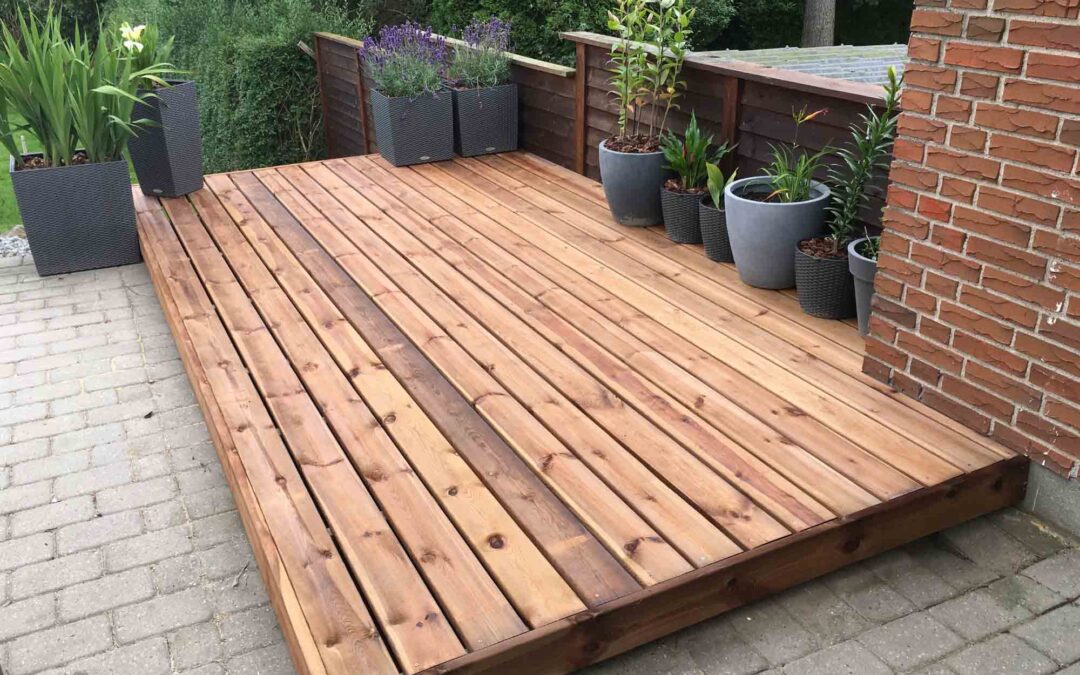
If you have started asking around about decking companies Southend-on-Sea homeowners actually rate, you have probably noticed the same thing we did: plenty of businesses list decking as a service, but very few explain what the job really involves, what it should cost, or whether you need permission to build it. That gap is exactly why this guide exists. Tradeline Drives and Patios installs timber and composite decking across Southend-on-Sea, Leigh-on-Sea, Rayleigh, Rochford and Hockley, and this page sets out the practical detail other sites skip, so you can choose with confidence rather than guesswork.
What Separates the Best Decking Companies in Southend-on-Sea From the Rest
A deck is only as good as what sits underneath it. Anyone can screw boards onto a frame, but the companies worth hiring get the groundwork right first: a level, well-drained base, joists spaced correctly for the board type, and fixings that will not corrode. Skip any of these steps and a deck that looks fine on day one will start to bounce, gap or rot within a couple of winters.
When you are comparing decking companies in Southend-on-Sea, ask each one three things: how they prepare the ground, what guarantee they offer on workmanship, and whether they will put the quote in writing before work starts. A contractor who answers all three clearly, without vague reassurance, is usually the safer choice.
Timber or Composite: Which Suits a Southend-on-Sea Garden
Both materials work well locally, but they suit different gardens and different owners.
Softwood timber decking is the cheaper option up front and gives a natural, warm look that suits older or period properties. It needs annual oiling or staining to stop it greying and splitting, and in a damp, shaded garden it can need replacing within 10 to 15 years if maintenance slips.
Composite decking, made from a blend of wood fibre and recycled plastic, costs more initially but needs no staining, resists rot and will not splinter. For a low-maintenance garden, or a raised deck that is awkward to reach for yearly treatment, composite is usually the better long-term choice. We fit boards from established manufacturers rather than unbranded budget composite, since board quality is the single biggest factor in how a composite deck performs after five or ten years.
Decking Materials Compared at a Glance
Seeing the main options side by side makes the trade-offs clearer than reading about them one at a time. The table below reflects what we see on real jobs across Southend-on-Sea and the surrounding towns, not manufacturer marketing figures.
| Material | Typical lifespan | Maintenance | Best suited to |
|---|---|---|---|
| Softwood timber | 10 to 15 years | Annual oiling or staining | Period properties, lower budgets |
| Hardwood timber | 20 to 25 years | Occasional oiling | Owners wanting a premium natural look |
| Uncapped composite | 15 to 20 years | Low, occasional cleaning | Budget-conscious, low-maintenance gardens |
| Capped composite | 25 to 30 years | Minimal, no sealing needed | Coastal gardens, raised or hard-to-reach decks |
Hardwood such as balau or oak sits between softwood and composite on price, and it ages to an attractive silver-grey if left untreated, which some owners prefer to a maintained finish. It is worth asking any decking company in Southend-on-Sea whether they have fitted hardwood locally, since not every contractor regularly works with it.
Design Styles and Board Colours That Suit Southend Gardens
Board colour and layout affect a deck’s appearance as much as the material itself. Grey and driftwood-toned composite boards are currently the most requested finish across Southend-on-Sea and Leigh-on-Sea, largely because they sit well against both render and brick, and they do not show salt residue or dust as readily as darker browns. Warmer golden-brown tones remain popular on period properties in Rochford and Hockley, where they complement original brickwork.
Board direction matters more than most homeowners expect. Laying boards parallel to the house generally makes a garden feel wider, while a diagonal lay or a mixed pattern around a seating area can turn a standard rectangular deck into a more considered design feature. Mixing a composite deck with a porcelain or natural stone patio, rather than choosing one or the other, is increasingly common locally, letting a dining area sit on stone while a step-down deck handles the transition to lawn. Integrated plinth lighting and glass balustrades are the two upgrades we are asked for most often on raised coastal decks, both for safety on steps at night and for the sea view they preserve compared with timber balustrades.
Seasonal Deck Maintenance in a Coastal Climate
A deck near the Thames Estuary faces a slightly different maintenance calendar than one further inland, mainly because of salt spray and higher humidity. In spring, clear any debris that has collected over winter and check that drainage gaps between boards have not become blocked, since standing water is the main cause of early rot and mould. Over summer, a light wash removes salt residue before it has a chance to dull the board surface, and it is worth checking fixings on any deck built before stainless steel screws became standard practice. Autumn brings leaf fall, which stains both timber and composite if left to sit, so regular sweeping through this period matters more than at any other time of year. In winter, keep an eye on ice forming on north-facing or shaded sections, since a deck surface can be more slippery than it looks, and avoid using rock salt as a de-icer on composite boards, since it can affect the surface finish over time.
Timber decking needs this same seasonal attention plus an annual oil or stain, usually applied in late spring once the boards have dried out from winter weather. Composite decking skips that step entirely, which is one of the main reasons it has become the more common choice for the second homes and holiday lets found around Thorpe Bay and Chalkwell.
What Decking Costs in Southend-on-Sea in 2026
As a general guide for 2026, softwood timber decking typically costs £100 to £160 per square metre installed, while composite decking usually runs £150 to £250 per square metre, depending on board quality, substructure height and how much groundwork is needed before building starts. A modest 15 to 20 square metre deck therefore often falls between £2,000 and £5,000 all in.
Raised decks, steps, balustrades and lighting all add to the figure, as does any ground that needs levelling or draining before the frame goes down. Because every garden is different, we always provide a free, fixed written quote after a site visit rather than a price over the phone, so the number you agree is the number you pay.
Do You Need Planning Permission for Decking in Southend-on-Sea
Most ground-level decking in Southend-on-Sea falls under permitted development and needs no planning permission, provided it meets a few conditions. The deck must not raise the platform more than 300mm above ground level, it should not cover more than 50 percent of the garden when combined with other outbuildings, and it should not sit forward of the principal elevation of the house. Decking built higher than 300mm, or positioned where it overlooks a neighbour’s garden, is more likely to need an application. Full detail is set out on the Planning Portal’s decking guidance, and if your property is listed or in a conservation area, Southend-on-Sea City Council should always be checked before work begins. We review this with every client as part of the quote, so there are no surprises once building starts.
Building for the Coast: Groundwork That Holds Up in Southend’s Weather
A seafront location brings a real, practical challenge that inland decking companies rarely plan for: salt-laden air accelerates corrosion in cheap fixings and speeds up the breakdown of untreated timber. We use stainless steel or heavy-duty galvanised screws and joist brackets on every project, not just the ones nearest the seafront, because salt carries further inland than most people expect. Joists are set on adjustable support pads rather than resting directly on soil, which keeps timber off damp ground and allows air to circulate underneath the deck, reducing the risk of rot and preventing standing water from pooling against the frame after heavy rain.
Why Tradeline Drives and Patios Is the Decking Company Southend-on-Sea Homeowners Trust
Tradeline Drives and Patios is based in Rochford and has been building driveways, patios and decking across Southend-on-Sea, Leigh-on-Sea, Rayleigh and Hockley for years, which means we understand the local ground conditions, the coastal weather, and the planning rules specific to this part of Essex. Every decking project we complete carries a 5-year installation guarantee and a 10-year product guarantee, so you are covered long after the final board is fixed. We provide a free, fixed, written quote after visiting your property, never a rough estimate over the phone, and we handle the whole project ourselves rather than subcontracting it out, from the initial site survey through to the final inspection. You can see examples of completed driveway, patio and decking work in our project gallery, and our decking sits alongside patios and garden walls and steps as part of a complete outdoor build, so one team can manage the whole garden rather than you coordinating several different contractors.
How to Choose Between Southend’s Decking Companies
Once you have a shortlist, a few simple checks will tell you which decking companies in Southend-on-Sea are worth hiring and which are better avoided.
Ask to see recent, local project photos rather than stock images, since anyone genuinely active in the area should have current work to show. Check whether the quote is itemised, covering materials, groundwork, labour and waste removal separately, rather than a single vague total. Confirm the guarantee in writing, not just as a verbal promise. And ask directly how they handle drainage under the deck, since this one detail tells you more about a contractor’s actual competence than almost anything else they will say in a sales conversation. A company registered with a recognised scheme such as TrustMark has also been independently checked against government-endorsed standards, which adds a further layer of reassurance.
Guarantees, Insurance and What to Check Before You Sign
A written quote is only half the picture. Before signing anything, it is worth confirming three further points that separate an established decking company from a one-off trader working cash in hand. First, ask for proof of public liability insurance, ideally at least £2 million cover, since this protects you if something goes wrong on site during the build. Second, check whether the guarantee covers workmanship as well as materials, and get the length of each in writing rather than relying on a verbal figure given at the quote stage. Third, ask who will actually be on site carrying out the work, since some companies that advertise locally subcontract the physical build to a rotating team of tradespeople, which can mean less consistency and less accountability if a defect appears later.
None of this should feel like an interrogation. A contractor confident in their own standards will usually offer this information before you have to ask for it, and a company that becomes vague or defensive when questioned on insurance or guarantees is worth treating with caution, whatever their quote looks like on paper.
Get a Free Decking Quote in Southend-on-Sea
If you are ready to compare decking companies in Southend-on-Sea properly rather than guessing from a list of names, call Tradeline Drives and Patios on 01702 668781 or freephone 0800 696 5803, message us on WhatsApp at 07853 202125, or use our contact page to arrange a free survey and fixed written quote. We also build decking across Southend-on-Sea, Leigh-on-Sea, Rayleigh, Hockley and Rochford as part of our wider decking service.
Frequently Asked Questions
What is the price of composite decking in Southend-on-Sea?
Composite decking in Southend-on-Sea typically costs £150 to £250 per square metre installed in 2026, depending on board quality and how much groundwork is needed. A fixed price always follows a free site survey rather than a phone estimate.
Is composite decking better than timber for a coastal garden?
Composite decking generally performs better near the coast because it resists rot, salt corrosion and splitting without annual staining. Timber is cheaper initially and looks more natural, but it needs regular maintenance to cope with salty, damp air.
What is the longest lasting composite decking?
Capped composite boards, which have a protective outer layer bonded to the core, last the longest, often 25 to 30 years with minimal upkeep. Uncapped or budget composite boards absorb more moisture and tend to fade and wear sooner.
Do you need planning permission for decking in Southend-on-Sea?
Most ground-level decking under 300mm high falls under permitted development and needs no planning permission. Raised platforms over 300mm, decks covering more than half the garden, or those affecting a neighbour’s privacy are more likely to require an application.
What ruins composite decking?
Composite decking is mainly damaged by trapped moisture, poor ventilation underneath the boards, and harsh pressure washing that strips the surface finish. Leaving organic debris such as leaves to sit on the boards can also cause staining and mould over time.
Should you jet wash composite decking?
A jet wash on a low setting with a wide fan nozzle is generally safe, but high-pressure settings held too close can scar the board surface. A soft brush with warm water and mild detergent is the gentler, recommended approach for regular cleaning.
What is the best way to clean composite decking?
Regular sweeping to remove debris, combined with an occasional wash using warm water, a soft-bristle brush and mild soap, keeps composite decking looking new. Stubborn marks can be treated with a dedicated composite decking cleaner rather than bleach or harsh chemicals.
Does composite decking need to be sealed?
No, most modern composite decking does not need sealing, staining or oiling, which is one of its main advantages over timber. The outer capping or finish is designed to resist moisture and UV damage without any additional treatment.
How long does it take to install decking in Southend-on-Sea?
A standard residential deck usually takes two to five working days to install, depending on size, groundwork and whether steps or balustrades are included. We confirm a clear timeline as part of every written quote before work begins.
Which areas of Southend-on-Sea and Leigh-on-Sea do you cover?
We install decking across Southend-on-Sea, Westcliff-on-Sea, Leigh-on-Sea, Thorpe Bay and Shoeburyness, as well as Rayleigh, Hockley and our home base of Rochford. If you are just outside these areas, contact us to check coverage.