
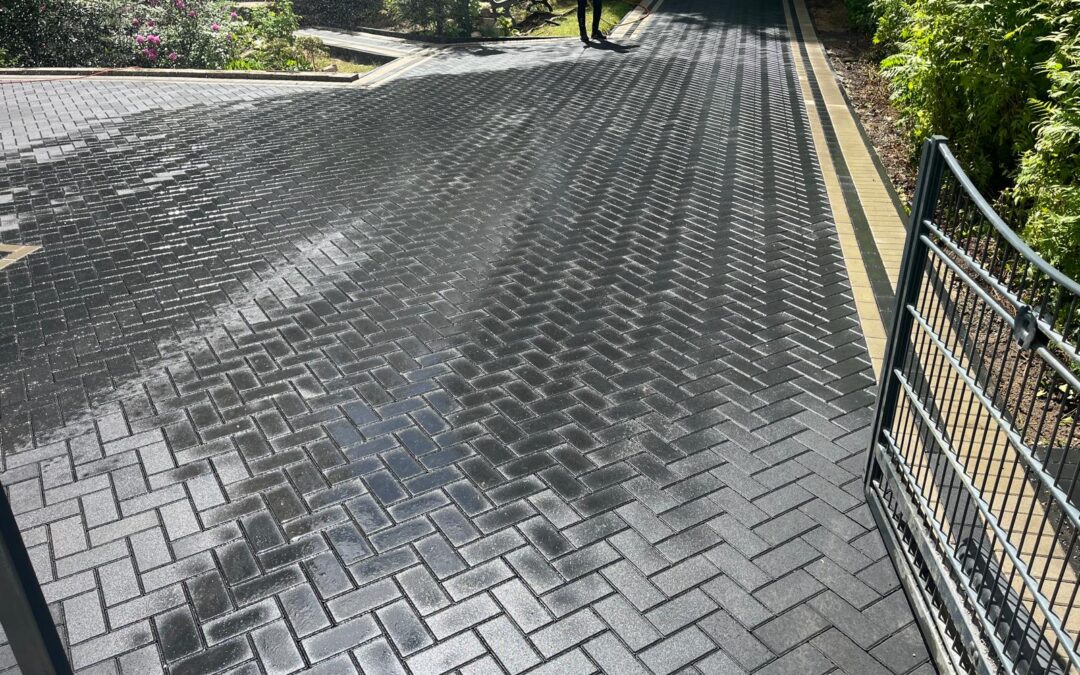
Professional driveways in Southend-on-Sea require specialist sub-base engineering capable of stabilising coastal alluvial sands, silts, and moisture-sensitive soils. Proper installations incorporate 150mm–200mm compacted aggregate foundations, geotextile reinforcement membranes, and SuDS-compliant permeable surfacing systems aligned with Southend-on-Sea City Council drainage and highways regulations.
Why Do Driveways in Southend-on-Sea Require Specialist Groundworks?
Southend-on-Sea presents highly specific civil engineering challenges due to its coastal geography, fluctuating groundwater levels, and mixed subsoil conditions across the SS0, SS1, SS2, SS3, and SS9 postcode sectors. Properties near Chalkwell, Thorpe Bay, Leigh-on-Sea, Shoeburyness, and Westcliff-on-Sea often sit above variable layers of marine sands, estuarine silts, clay pockets, and reclaimed coastal ground.
These underlying conditions directly affect driveway longevity, structural stability, and drainage behaviour.
Many older properties around Southchurch Road, London Road, Marine Parade, Eastern Esplanade, and the A127 corridor were constructed before modern drainage regulations existed. As a result, legacy hardstanding areas frequently suffer from:
- Differential settlement
- Surface ponding
- Edge collapse
- Rutting beneath vehicle turning points
- Sub-base washout
- Frost-related heave
- Hydrostatic movement during prolonged rainfall
At Tradeline Drives local groundworks, every driveway installation begins with a full excavation and sub-grade assessment to determine the correct structural build-up for the property’s exact geological profile.
How Is a Structurally Stable Driveway Built in Southend-on-Sea?
A properly engineered driveway requires far more than decorative surfacing. Long-term durability depends entirely on the integrity of the foundation system beneath the visible surface layer.
Typical structural specification for driveways Southend-on-Sea:
| Structural Layer | Typical Specification | Engineering Purpose |
|---|---|---|
| Surface Course | Resin bound, block paving, or asphalt | Vehicular wearing layer |
| Bedding Layer | Sharp sand or open-graded asphalt | Surface levelling and load transfer |
| Geotextile Membrane | High-tensile permeable separator membrane | Prevents aggregate migration |
| Sub-Base | 150mm–200mm MOT Type 1 or Type 3 aggregate | Structural load-bearing platform |
| Sub-Grade | Stabilised native soil | Foundation support |
Loose coastal sands commonly found near Thorpe Bay and Shoeburyness require deeper compaction and membrane reinforcement. Without separation membranes, aggregate contamination occurs as the sub-base gradually sinks into the underlying sand matrix.
This eventually leads to:
- Cracked paving
- Wheel depressions
- Uneven settlement
- Drainage failure
- Surface instability
Learn more about our internal installation standards through our driveways service hub: Tradeline Drives
What Excavation Depth Is Required for Driveways Southend-on-Sea?
Excavation depth depends on:
- Vehicle loading
- Existing ground conditions
- Drainage strategy
- Surface material
- Soil bearing capacity
Typical domestic driveway excavation depths in Southend-on-Sea include:
| Surface Type | Typical Excavation Depth |
|---|---|
| Resin Bound | 220mm–260mm |
| Block Paving | 230mm–280mm |
| Tarmacadam | 200mm–250mm |
| Permeable Block Paving | 260mm–320mm |
Areas with unstable coastal fill or waterlogged silts may require:
- Additional geogrid reinforcement
- Lime stabilisation
- Increased aggregate depth
- Soakaway attenuation systems
Sub-base compaction is completed in layers using vibrating plate compactors or twin-drum rollers to achieve full density compliance.
Why Are SuDS Compliant Driveways Essential in Southend-on-Sea?
Southend-on-Sea experiences intense coastal rainfall and periodic surface water flooding, particularly near low-lying seafront areas and older drainage networks.
Current UK legislation states that any new or replacement driveway over 5m² must provide permeable drainage or obtain planning approval if runoff enters the public highway drainage system.
- SuDS compliant driveways are specifically designed to:
- Reduce runoff
- Minimise flash flooding
- Filter contaminants
- Recharge groundwater naturally
- Reduce burden on municipal sewers
Tradeline Drives local groundworks installs:
- Resin bound permeable systems
- Open-graded sub-bases
- Permeable block paving
- Soakaway chambers
- Linear drainage channels
- Cross-fall water management systems
How Does Resin Bound Surfacing Perform in Coastal Conditions?
Resin bound driveways Southend require specialist material selection because coastal UV exposure, salt air, and fluctuating temperatures accelerate material degradation.
Low-quality aromatic polyurethane resins often:
- Yellow rapidly
- Become brittle
- Crack under thermal movement
- Lose aggregate adhesion
For this reason, Tradeline Drives exclusively specifies UV-stable aliphatic polyurethane systems.
Benefits include:
- Colour stability
- Salt resistance
- High permeability
- Weed suppression
- Smooth anti-slip finish
- Reduced loose aggregate migration
Typical resin bound installation specification:
| Component | Specification |
|---|---|
| Surface Thickness | 18mm–20mm |
| Aggregate Type | Kiln-dried natural stone |
| Binder | UV-stable aliphatic polyurethane |
| Base Layer | Open-graded asphalt |
| Drainage Rate | Up to 850 litres/min/m² |
Explore additional internal information about resin systems here: Resin Bound Driveways Southend-on-Sea
Why Is Block Paving Still Popular in Southend-on-Sea?
Block paving Southend-on-Sea remains one of the most structurally reliable and visually adaptable driveway systems available.
It is especially suited to:
- Victorian terraces
- Edwardian homes
- Heritage properties
- Large frontages
- Multi-vehicle parking areas
The engineering strength of block paving derives from interlock mechanics.
When installed in:
- 45° herringbone
- 90° herringbone
the paving distributes braking and turning forces laterally across the entire surface rather than concentrating stress in isolated areas.
What Block Paving Specification Prevents Sinking?
Professional block paving systems require:
| Component | Specification |
|---|---|
| Blocks | 50mm–80mm concrete or clay |
| Sub-Base | Minimum 150mm MOT Type 1 |
| Bedding Layer | 35mm–50mm compacted sharp sand |
| Edge Restraints | Concrete haunched kerbs |
| Jointing | Kiln-dried silica sand |
Edge restraint failure is one of the most common causes of driveway movement in Southend-on-Sea due to loose sandy soils.
Tradeline Drives installs:
- Reinforced concrete haunching
- Granite setts
- Structural kerbing systems
- Deep perimeter restraints
View additional paving solutions here:Block Paving Southend-on-Sea
Do You Need Planning Permission for a Driveway in Southend-on-Sea?
Planning permission requirements depend primarily on permeability and water management.
You generally do not require planning permission if:
- The driveway is permeable
- Water drains naturally into the ground
- Surface runoff does not discharge onto the public highway
Planning approval may be required if:
- Non-permeable surfacing exceeds 5m²
- Drainage enters public sewers
- The property is within a conservation area
- Vehicle access alterations affect highways infrastructure
What Are the Dropped Kerb Regulations in Essex?
Any vehicle crossing over a public footpath requires an authorised dropped kerb installation.
Under the Highways Act 1980, driving across a pavement without approval is unlawful.
Southend-on-Sea City Council requires:
- Minimum parking depth of 5m
- Safe visibility splays
- Clearance from junctions
- Distance from utility covers
- Safe pedestrian accessibility
Applications near:
- A13
- A127
- A1159
- Victoria Avenue
- Prince Avenue
often undergo additional highways scrutiny.
The dropped kerb application Essex process typically involves:
| Stage | Requirement |
|---|---|
| Site Assessment | Dimensional verification |
| Highway Review | Traffic and safety analysis |
| Application Submission | Council review and fee |
| Approval | Permission issuance |
| Construction | NRSWA-accredited contractor works |
Official crossover guidance:
How Are Drainage Falls Calculated for Driveways?
Proper surface water management is critical in coastal Essex.
Incorrect falls often lead to:
- Standing water
- Foundation saturation
- Moss growth
- Freeze-thaw damage
- Surface deterioration
Typical drainage geometry used by Tradeline Drives local groundworks:
| Drainage Element | Typical Specification |
|---|---|
| Cross Fall | 1:60 to 1:80 |
| Linear Drainage Channels | Polymer concrete ACO systems |
| Soakaway Crates | Geocellular attenuation systems |
| Permeable Sub-Base | MOT Type 3 open graded aggregate |
Drainage design follows:
- SuDS guidance
- Building Regulations Part H
- Local authority runoff management standards
Official drainage regulations: Building Regulations Part H
How Does Coastal Groundwater Affect Driveway Stability?
Properties near the Thames Estuary often experience elevated groundwater movement.
This can:
- Reduce soil bearing capacity
- Cause sub-grade softening
- Increase hydrostatic pressure
- Destabilise shallow foundations
Areas most affected commonly include:
- Shoeburyness
- Thorpe Bay
- Eastern Esplanade
- Southchurch
- Seafront properties
Engineering mitigation measures include:
- Increased excavation depths
- Geotextile reinforcement
- Permeable drainage systems
- Open-graded aggregate reservoirs
- Controlled compaction staging
What Compaction Methods Are Used During Installation?
Sub-base compaction is one of the most important structural stages.
Poorly compacted aggregate eventually settles under repeated wheel loading.
Tradeline Drives uses:
- Vibrating plate compactors
- Twin drum rollers
- Layered aggregate consolidation
- Dynamic compaction sequencing
Aggregate is compacted in controlled lifts typically no greater than:
- 50mm–75mm per layer
This prevents:
- Voids
- Differential settlement
- Subsurface movement
Why Is MOT Type 3 Aggregate Important for Permeable Driveways?
Unlike MOT Type 1, MOT Type 3 contains reduced fines content.
This allows:
- Water storage
- Controlled infiltration
- Void retention
- Sustainable drainage compliance
Permeable driveways Southend-on-Sea rely heavily on Type 3 aggregates because coastal rainfall events can produce rapid runoff volumes.
Typical Type 3 sub-base void ratios:
- Approximately 30–40%
This effectively creates an underground attenuation reservoir.
How Does Tradeline Drives Ensure Long-Term Structural Performance?
Every installation follows a strict engineering protocol.
Key quality assurance measures include:
| Quality Control Area | Engineering Procedure |
|---|---|
| Utility Detection | CAT scanning and service tracing |
| Excavation Accuracy | Laser-level excavation grading |
| Aggregate Verification | Certified compliant materials |
| Drainage Testing | Flow testing before surfacing |
| Edge Restraints | Reinforced concrete haunching |
| Surface Alignment | Laser-guided screeding |
All works are aligned with:
- BS EN 13242
- BS EN 1338
- SuDS guidance
- Local highways standards
British Standards reference: British Standards Institution
Which Areas Does Tradeline Drives Cover Around Southend-on-Sea?
Tradeline Drives local groundworks regularly completes driveway projects across:
- Leigh-on-Sea
- Westcliff-on-Sea
- Chalkwell
- Thorpe Bay
- Shoeburyness
- Prittlewell
- Rochford
- Hadleigh
- Benfleet
- Rayleigh
- Hockley
Nearby transport corridors include:
- A127
- A13
- Eastern Avenue
- Prince Avenue
- Southchurch Boulevard
How Long Does a Resin Bound Driveway Last?
A professionally installed resin bound driveway Southend installation typically achieves:
- 20–25+ years lifespan
Longevity depends on:
- Sub-base quality
- UV stability
- Correct drainage
- Aggregate grading
- Vehicle loading frequency
Can Driveways Be Installed During Wet Coastal Weather?
Installation timing is critical in Essex coastal environments.
Heavy rainfall or high humidity can affect:
- Resin curing
- Sand moisture levels
- Asphalt compaction
- Joint stabilisation
Professional installers monitor:
- Ambient temperature
- Dew point
- Ground moisture
- Rainfall forecasts
to ensure installation integrity.
What Maintenance Is Required for Driveways Southend-on-Sea?
Coastal environments accelerate biological growth and salt contamination.
Routine maintenance should include:
- Sweeping debris
- Clearing drainage channels
- Moss removal
- Gentle pressure washing
- Joint sand replenishment where necessary
Recommended maintenance frequency:
- Every 6–12 months
Why Choose Tradeline Drives Local Groundworks?
Driveways Southend-on-Sea demand far more than decorative surfacing expertise. They require specialist understanding of:
- Coastal geotechnics
- Drainage engineering
- Local planning controls
- Highway compliance
- Structural groundworks
Tradeline Drives combines:
- Local geological knowledge
- Advanced sub-base engineering
- SuDS-compliant installations
- Precision drainage systems
- Full regulatory compliance
Arrange a local site survey and quotation today:Driveways Southend-on-Sea